Hatha - 60 min Cancelled
27 September 2026 •
17:00 - 18:00
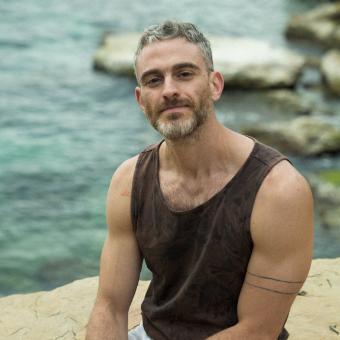
ROBERTO PATELLA
Roberto’s relationship with yoga began more than twenty years ago, initially through the physicality of the practice and a curiosity about the sensations, intelligence, and possibilities of the body. Over time, that curiosity began to move inward.
Meditation entered his life in his late twenties, followed by a deeper exploration of breath, philosophy, and the subtler dimensions of yoga. By his mid-thirties, teaching became a natural extension of that inquiry—a way of sharing a practice that continues to evolve alongside his own experience.
His teaching is rooted primarily in Haṭha Yoga and Vinyasa Krama, with an emphasis on the relationship between breath, movement, attention, and energetic awareness. He has completed 300 hours of training in Haṭha and Vinyasa Krama and continues his study of Prana Vashya with Vinay Kumar. Prāṇāyāma and meditation have become increasingly central to both his personal practice and teaching.
His background in pedagogy, photography, and bodywork also informs his approach to yoga. Each has shaped his understanding of observation: how to look closely, how to listen, and how to recognize what is happening rather than imposing what should be happening.
Roberto is less interested in yoga as the pursuit of increasingly complex shapes than in what those shapes can reveal. The body becomes a place of inquiry—a way of exploring effort and surrender, stability and change, concentration and sensation.
His classes can be physically demanding, but intensity is never the destination. Movement, stillness, breath, and attention become different ways of approaching the same question: how fully can we inhabit our experience?
For Roberto, yoga remains exactly that—an ongoing exploration rather than something to master.
Description
A steady, grounded practice centered on alignment, stability, and the refinement of posture. Movements are slower and more deliberate, with time to organize the body, build strength, and understand each position from within. The breath supports the structure, rather than driving continuous flow. This practice develops resilience, awareness, and a deeper relationship to form.